From TikTok meme to propaganda: the rise of slopaganda
21 May 2026
The project builds on Ambient Propaganda, an earlier research programme from 2023 in which Tuters and colleagues investigated modern propaganda on social media. ‘In that project, we looked at pro-Russian TikTok memes surrounding the war in Ukraine. It was content that strongly resembled propaganda, yet was also deeply intertwined with internet culture,’ says Tuters. ‘It proved difficult to define this unequivocally as propaganda, because propaganda has traditionally been understood as messages originating from a specific actor, involving clear manipulation and traceable campaigns. These videos existed in a grey area instead: the propaganda was not directly imposed on viewers, but became subtly woven into the platform’s online culture.’
AI-generated content has also become increasingly embedded in social media culture in recent years. While estimates vary considerably between platforms and remain difficult to verify, researchers suggest that AI-generated content now constitutes a growing share of online activity.
Slopaganda
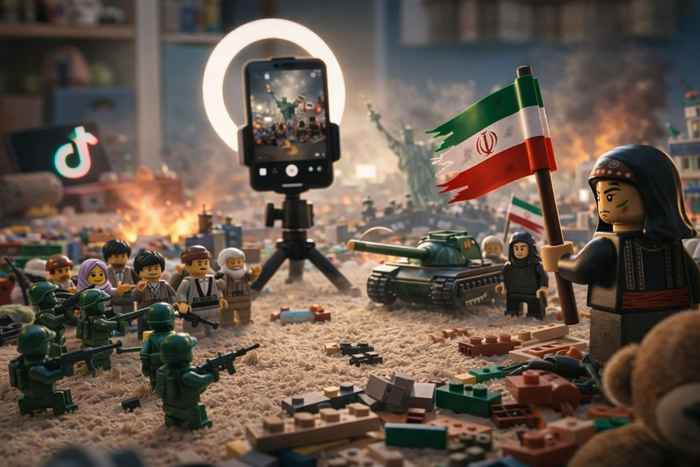
A new development within this trend is slopaganda: AI-generated propaganda content that can be produced and circulated rapidly, cheaply and at scale. Rather than relying primarily on direct persuasion, it often works through repetition, humour, aesthetic familiarity and platform dynamics to shape attention and engagement. ‘It is characterised by content designed to circulate and generate engagement rather than to persuade audiences directly,’ says Tuters. ‘And we are also seeing that this approach is effective. Users often share content not because they believe in it, but because it is funny, striking or trending. Algorithms then automatically amplify that distribution, blurring the boundary between online culture and geopolitical conflict. Platforms such as TikTok, Instagram and YouTube are therefore no longer merely places for entertainment, but are increasingly becoming part of the infrastructure through which modern conflicts unfold.’
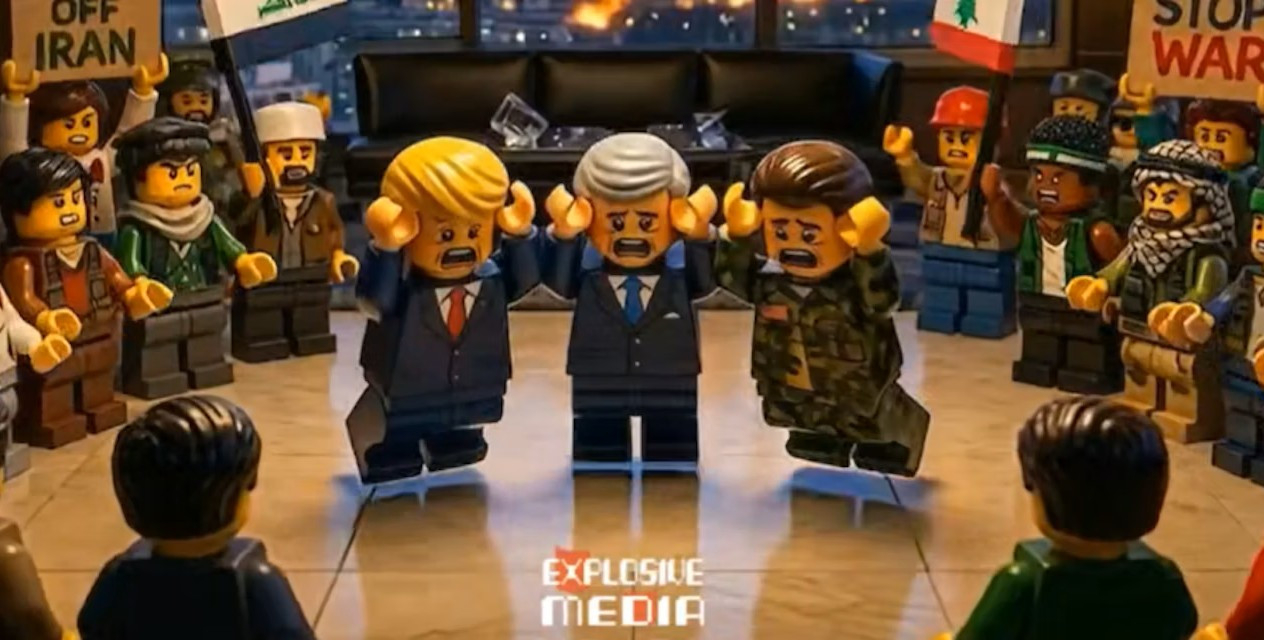
As an example of slopaganda, Tuters points to AI-generated videos distributed by Iran in which Donald Trump is mocked in a Lego-style format. ‘Those videos were hugely successful and were viewed and shared millions of times. By using that harmless Lego aesthetic, they cleverly tapped into people’s sentiments and matched the platform’s vibe perfectly. At the same time, the bottom-up spread of the videos demonstrates that propaganda now reaches audiences in a very different way.’


Through this research, the team hopes to develop new ways of making modern online propaganda more visible and measurable. According to Tuters, many current systems are still poorly aligned with the way disinformation spreads today. ‘Many policy approaches and European initiatives still rely on frameworks that assume identifiable actors, coordinated campaigns and explicit attempts at manipulation,’ he says. ‘Developments are moving rapidly, and contemporary forms of influence increasingly emerge through diffuse, platform-native dynamics that do not always fit traditional definitions of propaganda.'