Yingjun Du receives ECVA PhD Award for research on learning with less data
13 september 2026
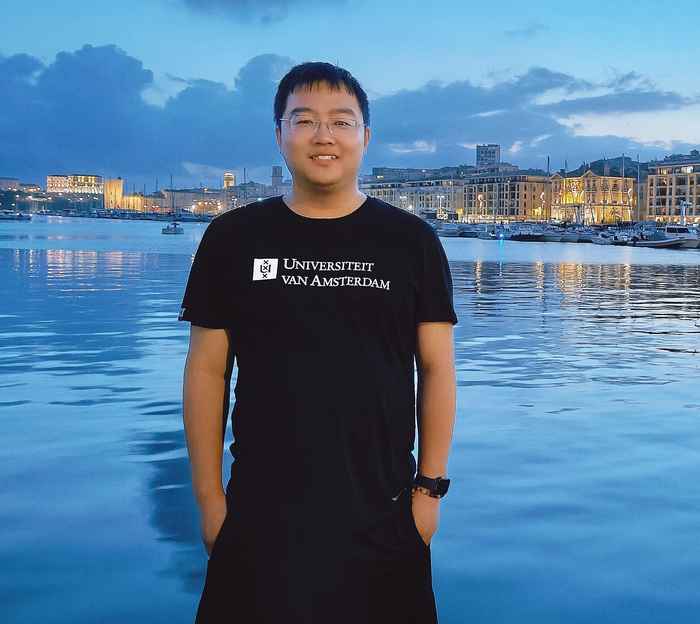
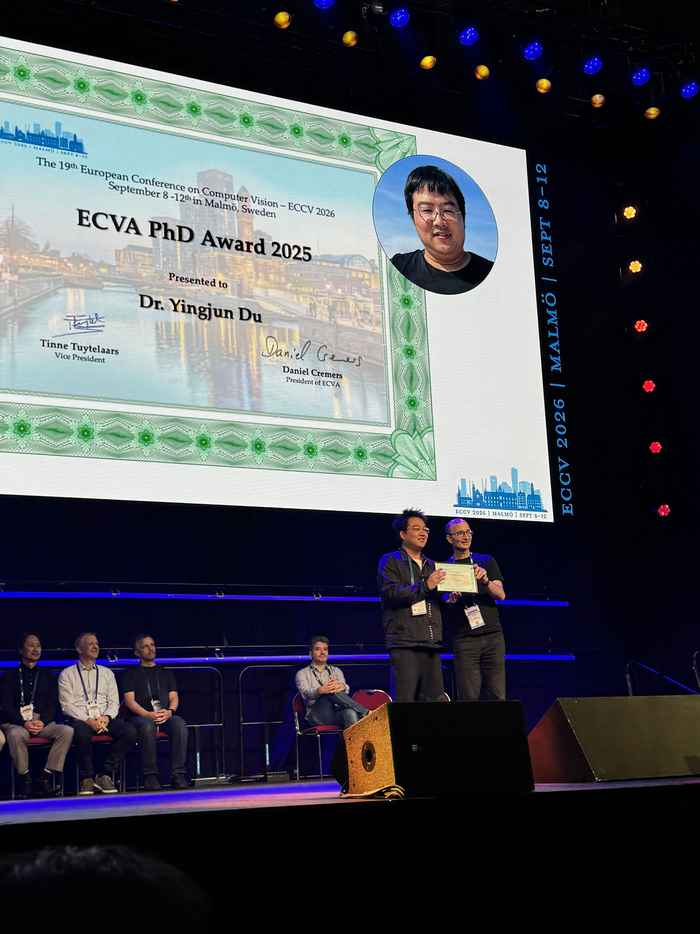
The ECVA PhD Award recognises outstanding research conducted during the PhD phase in Computer Vision. Yingjun’s dissertation explores a fundamental question in Artificial Intelligence (AI): how can AI systems learn effectively and adapt to new situations when data and supervision are limited?
Instead of relying solely on ever-larger datasets and models, Yingjun’s research develops learning methods that enable AI systems to learn from limited examples, generalise to previously unseen environments, and adapt when conditions change. His work brings together research on meta-learning, few-shot learning, domain generalisation, and test-time adaptation, with the broader goal of making AI systems more adaptive, data-efficient, and reliable.
Yingjun is currently a postdoctoral researcher at the University of Amsterdam, where he continues his research on adaptive and multimodal AI systems.
I am deeply honoured to receive the ECVA PhD Award. My PhD was driven by a simple question: can we make AI systems learn and adapt better, rather than simply giving them more and more data? I am very grateful to Prof. Cees Snoek and Dr Xiantong Zhen, my collaborators, and everyone who supported me throughout this journey. Receiving this recognition from the European Computer Vision community makes the journey especially meaningful.Yingjun Du
More about Yingjun Du
Yingjun Du awarded doctorate cum laude
Outstanding Chinese Postdoc Award for Yingjun Du